
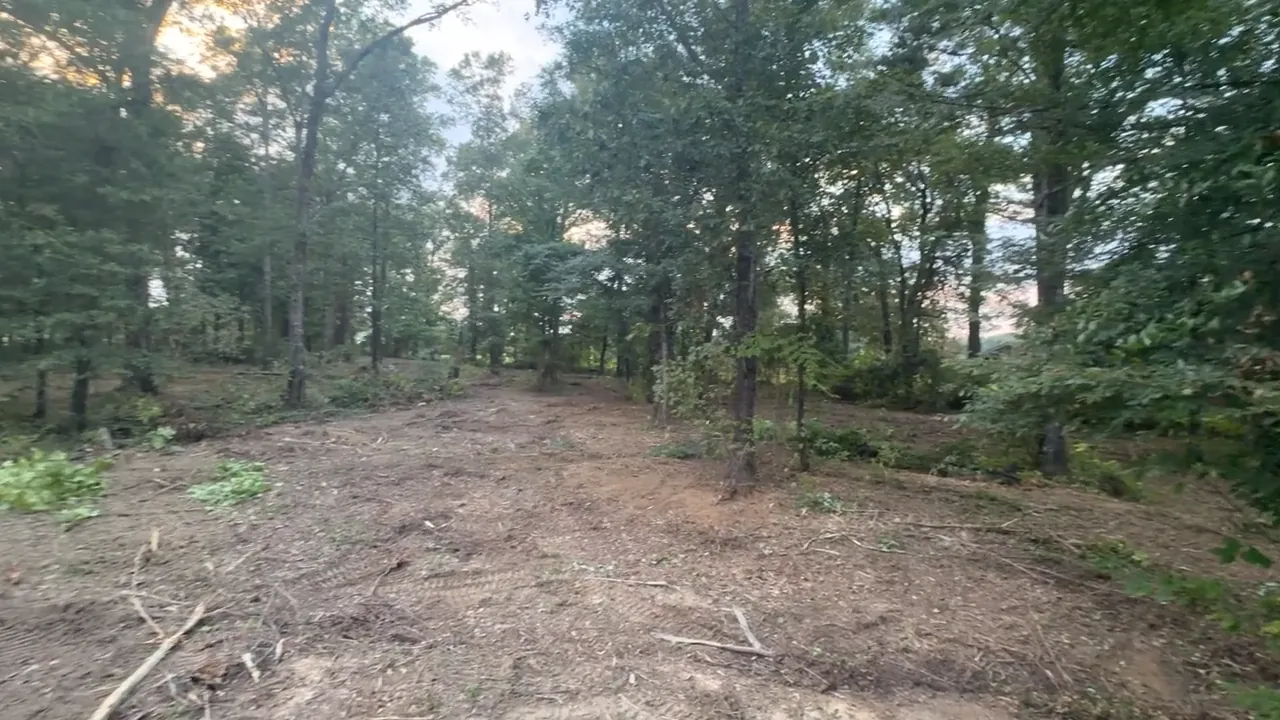
How much does a gravel road cost per mile in Louisiana?
National cost guides put a finished gravel road at $1.25 to $4 per square foot. On a rock road 12 feet wide, that comes to $15 to $48 per foot. Per mile, it lands at about $79,000 to $253,000. One guide prices a residential road a tenth of a mile long at $10,600 to $15,260, before permits.
The rock itself is a large part of that. A mile of 12 foot road with 6 inches of rock takes about 1,640 tons. At one guide’s delivered prices, the rock alone runs about $36,100 to $53,700.
Those are published figures from cost guides, not our prices. We price the rock roads and access we build after we look at the route, and that estimate is free.
What does a gravel road cost per mile and per foot?
Cost guides price a gravel road by the square foot, so width sets the per-mile number. One national guide lists gravel roads at $1.25 to $3 per square foot, installed. A second guide gives $1.25 to $4 for a gravel driveway or road. A mile is 5,280 feet, so here is what the wider spread means at three widths.
- 10 feet wide. A mile covers 52,800 square feet. That is about $66,000 to $211,000 a mile, or $12.50 to $40 a foot.
- 12 feet wide. A mile covers 63,360 square feet. That is about $79,000 to $253,000 a mile, or $15 to $48 a foot. One guide calls 12 feet the standard private road width.
- 16 feet wide. A mile covers 84,480 square feet. That is about $106,000 to $338,000 a mile, or $20 to $64 a foot.
At the first guide’s $3 top rate, a 12 foot mile tops out near $190,000. The tenth-mile road above works out to about $106,000 to $153,000 for a full mile.
Big rock orders can pull the price down. One guide says buying in large quantities can bring a discount. Another applies discounts to orders over 15 tons, and a mile of road takes well over 1,000.
How many tons of rock does a mile of rock road take?
A rock road is built in layers. A federal gravel roads guide says base rock has larger stone and very little fine material. Spread on top, it will not form a crust that holds the surface together. So a finer surface rock goes over the base.
The table builds one mile of road five ways. Each has a 2 inch top of crushed limestone over road base rock. The 6 inch base matches the first layer the federal guide sets over fabric on weak soil.
| Rock road, 1 mile | Rock layers | Tons | Truckloads | Rock cost, delivered | Rock cost per foot |
|---|---|---|---|---|---|
| 10 ft wide | 4 in base, 2 in top | 1,370 | 69 to 115 | $30,100 to $44,700 | $5.70 to $8.50 |
| 12 ft wide | 4 in base, 2 in top | 1,640 | 83 to 137 | $36,100 to $53,700 | $6.80 to $10.20 |
| 12 ft wide, over fabric | 6 in base, 2 in top | 2,190 | 110 to 183 | $46,000 to $70,100 | $8.70 to $13.30 |
| 16 ft wide | 4 in base, 2 in top | 2,190 | 110 to 183 | $48,200 to $71,500 | $9.10 to $13.60 |
| 16 ft wide, over fabric | 6 in base, 2 in top | 2,920 | 147 to 244 | $61,300 to $93,400 | $11.60 to $17.70 |
Tonnage assumes 1.4 tons per cubic yard, the low end of one national guide’s 1.4 to 1.5. Truck counts assume 12 to 20 tons per 10-wheel dump truck, also from that guide. Rock cost uses its delivered prices: road base at $18 to $30 a ton, limestone at $30 to $38.
The column is rock only, before fabric and labor. Distance adds to it, and the same guide adds $10 a mile past a 5 mile delivery zone. A UC Cooperative Extension guide for rural landowners calls placing rock the most expensive part of a permanent rural road.
What else changes the cost of a long gravel road?
Clearing the route
Camp roads and lease roads in the woods start with a cleared corridor. Louisiana’s forestry BMP guide keeps stumps, logs and slash out of road beds, except on corduroy roads. We open routes with forestry mulching and pull stumps out of the road bed. Clearing has its own price per acre, covered in our land clearing cost breakdown.
Fabric on wet Delta clay
Wet silt and clay soils pump up into new rock spread on them. Sharkey clay, a Mississippi River flood plain soil, is rated poorly drained and very slowly permeable by USDA. The federal guide lays geotextile fabric first, as a separator between the weak soil and the new rock. Over the fabric, its first layer of rock is at least 6 inches thick.
Crown, ditches and grade
For the crown, the federal guide has the center rise about 1/2 inch per foot, near 4 percent. On a 16 foot road, the center sits about 4 inches above each edge. Louisiana’s forestry BMP guide says a road bed should drain at all times through crowning, ditching, culverts and waterbars. On sloping ground, it recommends road grades between 2 and 10 percent.
Culverts at low spots
Each low spot or branch the road crosses needs a pipe sized to the water. The BMP guide sets culverts 1 to 2 percent downgrade so they do not clog. It asks for cover of at least half the pipe diameter, and never less than one foot. One national guide lists drainage systems at $2,000 to $5,500.
Pipe prices per foot are in our driveway culvert cost guide. We set culverts at road crossings as part of the road job.
The entrance
Where the road meets a highway or a parish road, the entrance is its own small job. The BMP guide says haul roads that meet a highway should use gravel or mats to keep mud off it. Permits for the connection are covered below.
What does it cost to keep up a rock road?
Traffic wears rock away. The federal guide cites up to one ton of rock lost per mile each year for every daily vehicle. A farm road with 10 vehicle passes a day could lose up to 10 tons a mile a year. At $18 to $30 a ton for road base, that is about $180 to $300 of rock.
The larger job is keeping the shape. One national guide says gravel needs regular grading and new stone. The UC Cooperative Extension guide calls road upkeep an unavoidable necessity of living in a rural area.
Louisiana’s forestry BMP guide lists an improperly kept road crown among common road mistakes. It also calls for clearing silt from ditches and trimming trees back so sun reaches the road.
What rules apply to a new road on Louisiana land?
What usually applies depends on where the road runs and what it crosses. Before we start, we check what applies to your route.
- Digging. State law calls for a Louisiana 811 notice at least 48 hours before mechanized excavation, not counting weekends and holidays.
- Disturbed ground. A mile of 12 foot road covers about 1.45 acres before ditches and clearing. LDEQ’s stormwater general permit for small construction covers one acre up to less than five acres of disturbed ground.
- Wetlands and streams. Under Clean Water Act Section 404, fill placed in waters of the United States needs a permit first. Exempt activities are the exception. Louisiana’s forestry BMP guide says forest roads in wetlands must follow 15 mandatory BMPs.
- The public road connection. Where the road meets a state highway, LA DOTD regulates the connection. Requests go first to the DOTD district Permit Specialist. A parish road connection follows that parish’s rules.
How is the work split on a long rock road?
On a rock road, the rock and the road work are two separate pieces. The rock is sold by the ton and arrives on a quarry or supplier truck. The road work, from clearing to packing, is the contractor’s part.
We work inside that split. We clear the route and shape the road bed and ditches with a compact track loader. Then we spread the supplier’s rock in layers, crown the surface and track-pack it.
The federal guide places road material in loose layers of about 4 inches. With larger compaction equipment, it allows up to 8 inches. It names pneumatic rollers as the tool most often used to compact gravel.
Some long or heavy-traffic roads need a dozer, a motor grader or a roller crew. When your road needs one, we say so on the estimate.
On a big tract, drone imagery of the property can help lay out the route before any clearing. Short home driveways run on different math. For a drive of a few hundred feet, see our gravel driveway cost guide.
What helps us price your road?
- The route. A map, plat or pin drop from the gate to where the road should end.
- The traffic. Pickups and side-by-sides, or loaded log and grain trucks.
- The wet spots. Low ground that holds water, and any branch or ditch the road crosses.
- The connection. Whether the road meets a state highway or a parish road.
If the road ends at a new house site, we build the gravel driveway there too. Big Cypress Land and Game works out of Rayville. Call (318) 235-7597 and we will look at your route, and the on-site estimate is free.