
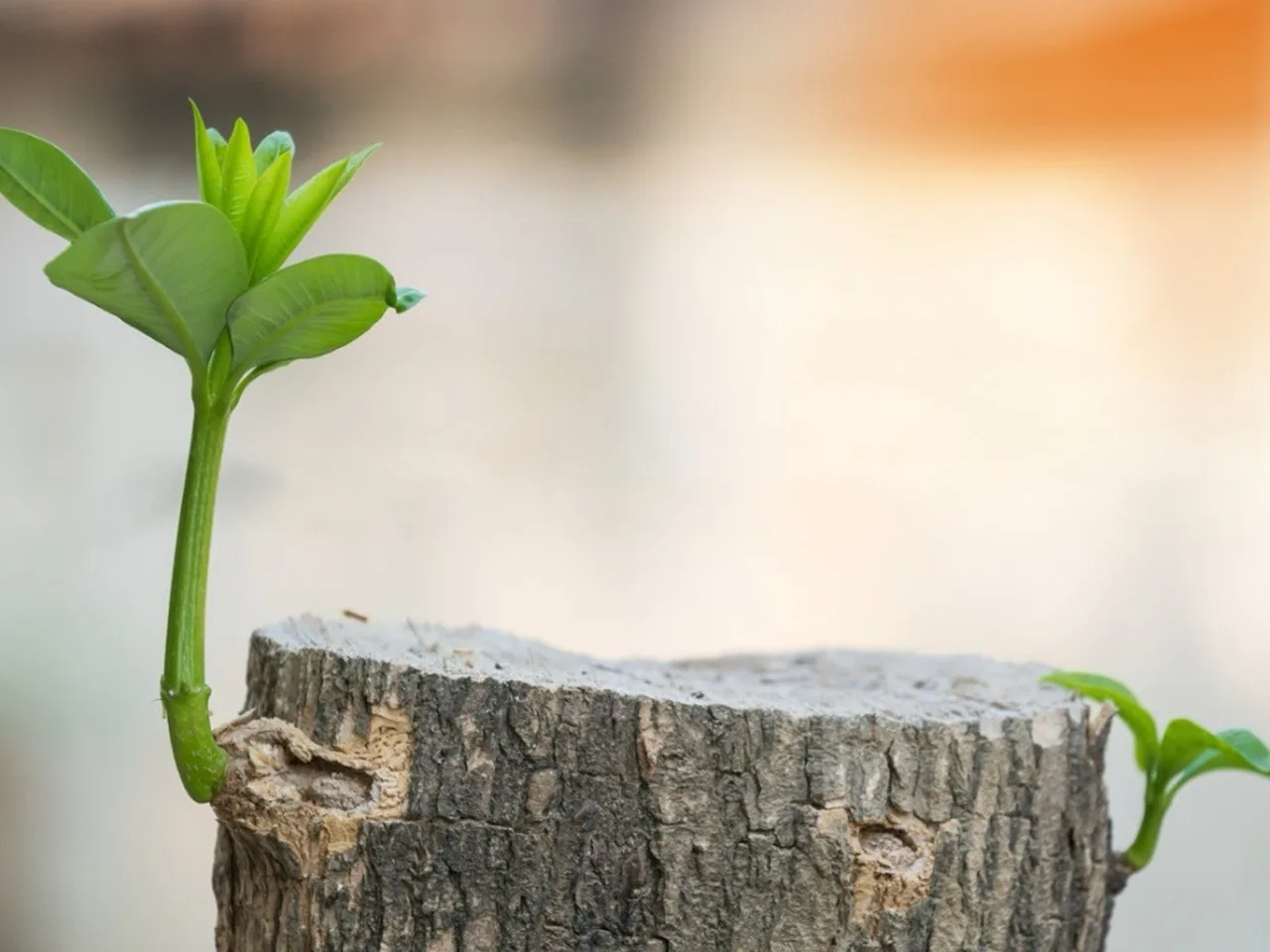
Will a stump grow back after grinding?
The stump itself, no. Grinding chews out the root collar, the zone at the base of the trunk where new sprouts start, so most trees are finished for good. The catch is species that sucker from their roots. Sweetgum, Chinese tallow, black locust, and a few other Louisiana regulars can push new shoots up from roots the grinder never reached.
So the real question is what kind of tree left the stump. Here is which species around Northeast Louisiana come back, which ones stay gone, and what actually happens to the roots, the hole, and the chips after a stump grinding crew leaves.
Where regrowth actually comes from
A tree has two ways to come back after it is cut. The first is stump sprouts, which rise from dormant buds in the root collar where the trunk meets the roots. Nearly all hardwoods can do this, which is why a cut-off stump left alone turns into a bush by August. Conifers mostly cannot.
Grinding kills that first pathway. A standard grind takes the stump 4 to 6 inches below grade, which removes the root collar and its buds. That is the whole reason grinding beats simply cutting a tree low and hoping.
The second pathway is root suckers, shoots that rise from buds on the lateral roots running out under your yard. No depth of grinding stops those, because the machine only works where the stump was. Deeper grinding buys nothing against a species that suckers. Only species biology decides this one.
Which Louisiana trees come back, and which stay gone
| Tree | Comes back after grinding? | What to expect |
|---|---|---|
| Loblolly and shortleaf pine | No | Mature pines do not sprout from stumps or roots. Done. |
| Sweetgum | Yes, aggressively | Suckers from lateral roots, sometimes dozens of shoots from one root system. |
| Chinese tallow | Yes, aggressively | Invasive across Louisiana; sprouts from shallow roots until the roots are dead. |
| Black locust | Yes, worst of all | Cutting it actually triggers more suckering across the root run. |
| Callery and Bradford pear | Yes | Notorious for resprouting from roots. |
| Crape myrtle | Yes | Vigorous shoots from the remaining roots for seasons. |
| Chinaberry | Yes | Readily sprouts from roots. |
| Hackberry | Rarely | Small stumps may sprout; big mature ones rarely do, and grinding removes the source. |
| Most oaks (water, red, white) | Rarely after grinding | They sprout from the root collar, which the grinder removes. Sprouting odds drop with age. |
| Live oak | Yes | The oak exception. Sprouts from the collar and the roots, and it is famously hard to kill. |
| Eastern cottonwood | Rarely after grinding | Stump-sprouts when young, but root suckering is uncommon. |
| Willow | Yes when young | Young root systems sprout prolifically; old ones fade. |
The species facts come from the US Forest Service’s silvics manuals and university extension programs, and the pattern is easy to remember out here: pine country stays quiet, sweetgum and tallow country talks back.
How to shut down the sprouts that do come
If a suckering species starts pushing shoots, you have two workable moves and one warning.
The mechanical move is persistence. Cut or mow every shoot at ground level as fast as it appears, and keep at it until the roots burn through their stored energy. Depending on the species that takes a couple of cuttings or a couple of seasons. On field edges and fence rows, this is one more thing regular bush hogging quietly handles for you.
The chemical move is faster. In a lawn, a standard broadleaf weed herbicide takes out sprouts without hurting grass. On invasives like tallow and locust, the strongest play happens at cutting time, painting concentrated herbicide onto the fresh-cut stump within minutes, before it is ever ground. If that window is missed, treat the sprouts as they rise.
The warning: never spray sprouts that are still connected to a living tree you want to keep. Suckers off the roots of a live tree share its plumbing, and herbicide applied to them travels back into the tree itself.
What happens to the roots left underground
They rot, and in our climate they rot on the fast end of the national range. University research on stump decay ties the speed to soil temperature, with the warm, wet Gulf South breaking wood down in a fraction of the time it takes up north. Even so, count on a year or two minimum before the soil there is worth planting into, and several years before the big roots are truly gone.
Two visible things happen while that runs. The ground settles, because decaying wood shrinks, so the neat level spot from grinding day slowly becomes a dip. And mushrooms show up, because fungi are the crew doing the demolition. Both are normal. Top up the dip with soil, and knock down the mushrooms where kids or pets play.
Doing the hole right
What you do the week after grinding decides whether that spot is lawn or a sore thumb.
Rake out most of the chips. A ground stump leaves a pile commonly two to three times the stump’s volume, and chips mixed into soil tie up nitrogen as they decompose, which is why grass planted straight into grindings comes in yellow. The chips make fine mulch in beds, kept away from the house foundation.
Backfill with real topsoil and mound it slightly above grade to ride out the settling. Sod covers the spot faster than seed. A shot of slow-release lawn fertilizer helps the new grass fight through what the buried wood is taking.
If you are planting a tree, put it at least 3 feet from the old spot, and 6 to 8 feet is better. The one case that justifies digging the old root system out entirely is covered in stump grinding vs stump removal.
The termite note every Louisiana yard has earned
Buried dead roots and chips do not attract termites from a distance. Extension research is clear that termites wander, and stay where they find wood touching soil. But in a state where Formosan subterranean termites are established and hungry, the sensible habits are cheap: grind stumps rather than leaving them to rot whole, get the chip pile handled instead of letting it sit against the house, and keep mulch a foot off the foundation.
FAQ
Will a tree grow back if you grind the stump? The stump itself will not regrow, and for most species the tree is finished, because grinding destroys the root collar where new sprouts start. The exceptions are species that sucker from their roots, like sweetgum, Chinese tallow, black locust, and crape myrtle. Those can send up shoots from roots the grinder never touched.
Do pine stumps grow back after grinding? No. Mature loblolly and shortleaf pines do not sprout from a cut stump or from their roots, so once a pine is cut and the stump is ground, that tree is done. This is one thing that makes pine country easy: grind the stump, fill the hole, and you will never hear from it again.
How do I stop shoots coming up where a stump was ground? Cut or mow every sprout at ground level as it appears until the roots run out of stored energy, which can take a couple of rounds or a couple of seasons. In a lawn, a standard broadleaf herbicide handles them. Never spray sprouts still connected to a living tree you want to keep, because the herbicide travels back through the shared roots.
How long does it take for roots to decompose after stump grinding? University guidance says a year or two at minimum before the soil there is worth planting into, and several years for the root system to fully break down, with warm and wet climates on the fast end. You will notice the ground above the old roots settling as they go. Topping up with soil once a year handles it.
How long does it take for the ground to settle after stump grinding? Expect settling for a year or two, sometimes longer under a big hardwood. The buried chips and decaying roots compress and shrink as they break down. Backfill the grind hole with soil mounded slightly above grade, and plan to add a little more the following season rather than fighting a dip later.
Should I fill the stump grinding hole with chips or dirt? Dirt, after raking most of the chips out. Chips mixed into the soil rob nitrogen from grass as they decompose and the spot stays yellow and soft. Pull the chips, use them as mulch in beds away from the house, backfill with topsoil, mound it a touch high, and seed or sod on top.
Why are mushrooms growing where my stump was ground? Fungi are eating the buried wood and dead roots, which is exactly how that material disappears. They are harmless to your grass and usually a good sign the breakdown is moving. Pick them if they bother you, and clear them where kids or pets play, since some mushroom species are poisonous.
Get the stump handled once
Most callbacks in this business are sprouts from a species nobody identified before the grind. Tell us what tree it was, or send a photo of the leaves if it is still standing, and we will tell you whether grinding alone finishes it. Call (318) 235-7597 or ask for a free on-site estimate, and our stump grinding crew will take it from there anywhere in Northeast Louisiana.