
Stump grinding vs. stump removal: which one do you actually need?
For most stumps, grinding is the answer. It costs a fraction of full removal, takes an hour instead of an afternoon, and leaves your yard intact. Full removal, pulling the stump and root ball out with an excavator, earns its price in a few specific cases: building on the spot, replanting the same hole, disease, or a species that resprouts from roots.
Here is how the two methods actually differ, what each leaves behind on your property, and the short list of situations where the expensive option is genuinely the right one. If you already know you just want the stumps gone, our stump grinding crew covers Northeast Louisiana.
What each method actually does
Stump grinding runs a spinning wheel of carbide teeth back and forth across the stump, chipping it into mulch from the top down. A standard grind stops 4 to 6 inches below ground level, deep enough to cover with soil and grow grass. The root system stays in the dirt and decays on its own schedule.
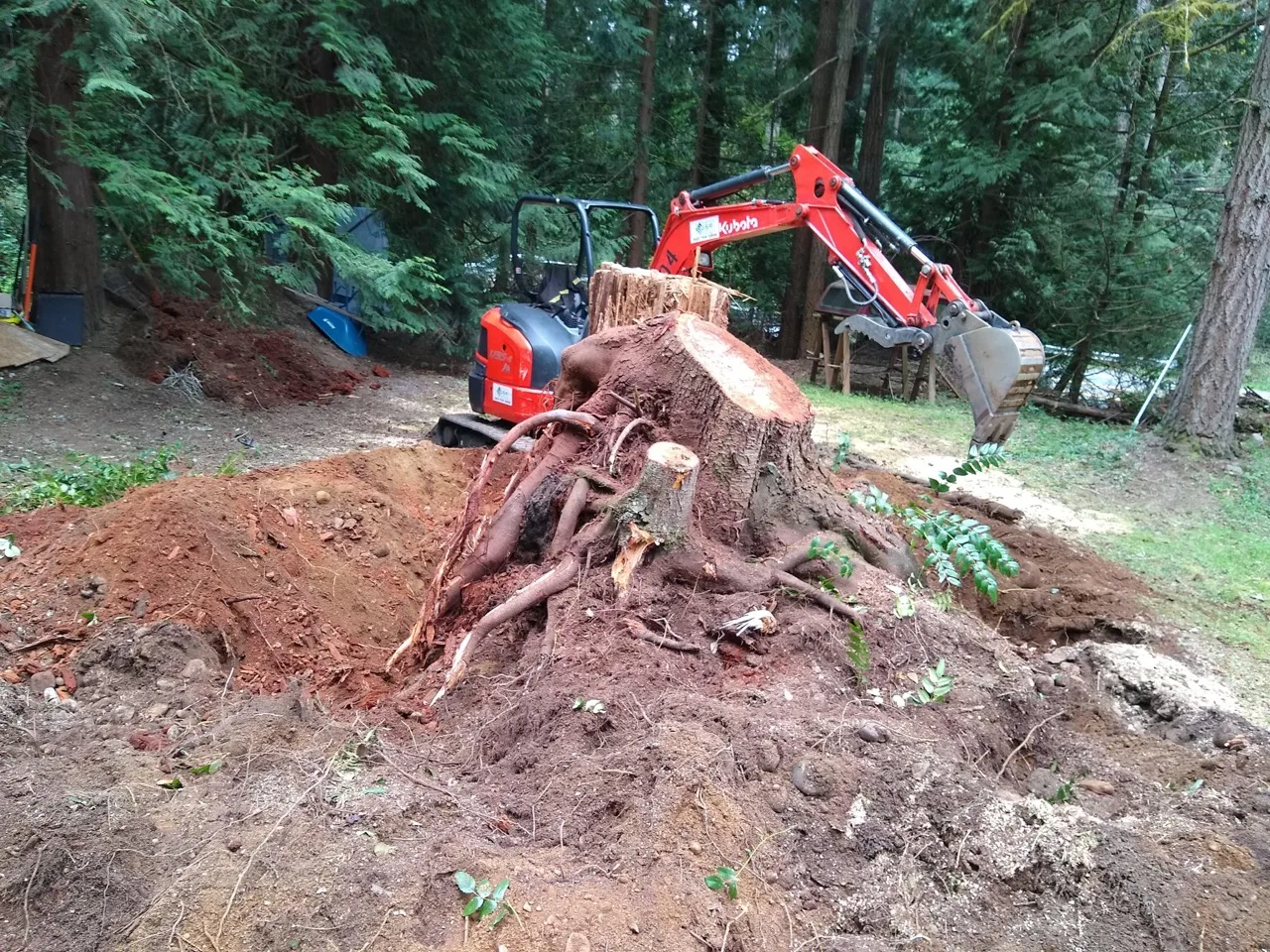
Stump removal is excavation. A machine digs around the stump, tears or cuts the major roots, and pulls the whole root ball out of the ground. Nothing woody is left under the surface where the tree stood, and what you have instead is a hole, often a big one, plus whatever the machine tracked across to get there.
Grinding vs removal, side by side
| Stump grinding | Full removal | |
|---|---|---|
| Cost for a 20 inch stump | $100–$400 | $370–$675 |
| Time on site | 30 minutes to 2 hours | 3 to 4 hours or more |
| What is left | Chip pile, roots in the ground | Large hole, root ball hauled off |
| Yard impact | Minimal, roughly the stump’s footprint | Torn ground, machine tracks, backfill needed |
| Ready for building on the spot | No, roots remain | Yes |
| Replant the exact spot | Not recommended | Yes, after backfill |
Cost ranges are national market figures, not our quote. On top of the removal price, plan for fill dirt and sod or seed, because the hole from a mature hardwood swallows more soil than people expect.
What grinding leaves behind, honestly
Grinding is the cheaper and cleaner option, and it is what we recommend for most stumps, but it is worth being straight about what stays in your yard.
The roots stay. In a warm, wet climate like ours they rot faster than they would up north, and university research on stump decay puts the Gulf South at the fast end of the national range, on the order of a couple of years for the bulk of it in open conditions. Big structural roots take longer. As they go, the ground above them settles, which is why a spot that was level the day of the grind can be a shallow dip two summers later. The fix is cheap: top it up with soil.
The chips stay too, unless you pay for haul-off. A ground stump produces a mound of chips commonly two to three times the stump’s volume. Rake the bulk of them out before you backfill, because chips mixed into soil tie up nitrogen as they decompose and grass over the spot comes in yellow and thin. And do not be alarmed by mushrooms popping up there for a few seasons. They are decay fungi eating the buried wood, they are normal, and they are doing you a favor.
If the stump belongs to a species that sprouts from its roots, grinding alone will not stop it. That problem gets its own treatment in will a stump grow back after grinding.
When full removal is worth the money
A few situations genuinely call for extraction, and trying to save money with a grind in these cases costs more later.
Building over the spot. Roots left under a slab, a driveway, a shop pad, or an addition keep decomposing after the concrete is poured, and decaying wood means voids and settling under something that must not settle. If a structure is going where the tree stood, the stump and the major roots come out, and the hole gets backfilled and compacted as part of the dirt work. The same logic covers septic lines and drain fields, where roots and future voids are exactly what you do not want.
Replanting the same spot. A new tree planted into old roots and chip-heavy dirt is fighting for its life from day one. Extension guidance is to offset a new tree at least 3 feet, ideally 6 to 8. If it has to be the exact spot, remove the old stump completely, backfill with clean soil and compost, and give the ground time.
Disease. Root-rot fungi like Armillaria survive in dead roots and move to the replacement planting. Extension plant pathologists recommend taking out the stump and as much root material as possible, not just grinding the top.
Aggressive resprouters. Chinese tallow, black locust, callery pear, and a few other species common on Louisiana fence rows can send up new shoots from roots the grinder never touches. For a one-time fix on those, extraction or a cut-stump herbicide treatment beats grinding alone.
The termite question, Louisiana edition
People ask whether a ground stump draws termites, and the honest answer is that the wood does not send out invitations, but it does feed whoever shows up. Extension research is clear that termites do not travel toward buried wood from a distance; they wander, and when they hit wood-to-soil contact they stay.
In Louisiana that matters more than in most states, because Formosan subterranean termites are established across much of the state, their colonies run into the millions, and unlike our native termites they will work on living trees, not just dead wood. State extension guidance is blunt: get stumps, dead trees, and wood piles off the property. Grinding the stump out, dealing with the chips, and keeping mulch off the foundation removes most of the standing food. Leaving a whole dead stump to rot for ten years is the worst of the options.
What we actually recommend on most properties
Grind almost everything. Pull the few stumps that sit where something is going to be built, poured, or planted. On bigger cleanups, where a land clearing job leaves a field of stumps, the same split applies: grind the open ground, excavate the building envelope. And if you are pricing the work, the numbers in our stump grinding cost guide show why batching every stump into one visit is the cheapest way through.
FAQ
What is the difference between stump grinding and stump removal? Grinding uses a spinning carbide wheel to chip the stump down 4 to 6 inches below ground level and leaves the roots to decay in place. Removal digs or pulls the entire stump and root ball out of the ground with an excavator, which takes the roots with it but leaves a large hole and torn-up ground.
Is it cheaper to grind or remove a stump? Grinding costs a fraction of removal. A 20 inch stump runs about $100 to $400 to grind and roughly $370 to $675 to dig out, before you count backfill dirt and lawn repair. That gap is why grinding is the default and removal is reserved for jobs that truly need the roots gone.
What happens to the roots after stump grinding? They stay in the ground and slowly rot. In a warm, wet climate like Louisiana’s, university research puts whole-stump decay at roughly two years and up in open conditions, faster than the north, though big roots take longer. As they break down the ground above them settles, so plan to top up the spot with soil.
When is full stump removal worth the extra cost? When something is going on top of that exact spot. A slab, a driveway, a septic line, or a new tree in the same hole all justify extraction. It is also the stronger fix for root-rot diseases and for aggressive species like Chinese tallow and black locust that can sprout back from roots left in the ground.
Do ground stumps attract termites? The chips and the buried roots do not summon termites from across the neighborhood, but termites that wander into wood-to-soil contact will stay and feed. In Louisiana, where Formosan subterranean termites are established, the safe play is grinding the stump out, handling the chips, and keeping wood debris away from the house.
Can you plant a new tree where a stump was ground? Not in the exact spot, at least not right away. Extension guidance is to plant at least 3 feet away, and ideally 6 to 8 feet, because the old roots and chip-heavy soil starve a new root ball. If it has to be the same spot, that is the one planting case where full removal is the right call.
How long does each method take? A grinder handles a typical stump in 30 minutes to 2 hours. Digging the same stump out runs 3 to 4 hours with an excavator, plus the backfill work, and a big hardwood can stretch longer. Multiply that across a lot with many stumps and grinding usually wins the schedule as well as the price.
Tell us what the spot needs to become
That one question answers most of this decision. Call (318) 235-7597 or request a free on-site estimate and walk us through what you want the ground to do. Big Cypress Land & Game handles stump grinding and full removal across Northeast Louisiana, and we will tell you plainly which stumps are worth pulling and which just need to disappear.